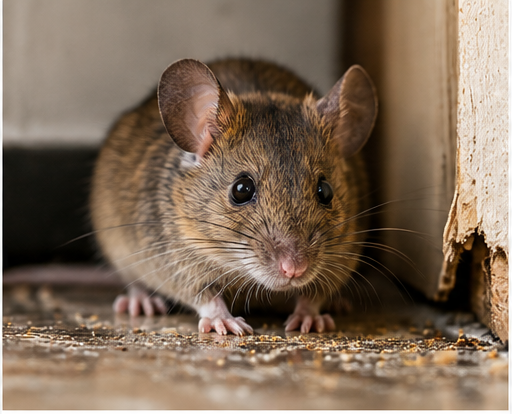
You found droppings in a cabinet. Something scratched behind the wall last night. Maybe a bag in the pantry suddenly has a hole in it.
The obvious question is:
How did a mouse get in here?
Finding the answer can be harder than finding the mouse.
House mice can squeeze through openings around 1/4 inch wide, according to Purdue Extension. That means an entry point doesn't have to look like a hole in your house. A narrow gap around a pipe, siding or garage door may be enough.
Purdue Agriculture
Start Around Doors and the Garage
Exterior doors are one of the first places worth checking.
Look underneath the door and along both bottom corners. If you can see daylight through a gap when the door is closed, the seal may need attention.
Garage doors deserve the same inspection. The rubber seal can wear down, crack or pull away from the floor over time. Because garages also tend to contain storage boxes, birdseed, pet food and other attractive materials, they can become a convenient first stop for rodents.
Check Where Utilities Enter the House
Plumbing, electrical wiring, cable lines and HVAC components all have to pass through exterior walls somewhere.
The openings around them aren't always sealed tightly. Materials can also shrink, crack or deteriorate as a home ages.
Take a flashlight and inspect around utility penetrations both inside and outside when possible. Pay particular attention to areas behind appliances, underneath sinks and near water heaters or HVAC equipment.
Look Along the Foundation
Small foundation gaps are easy to overlook, especially behind shrubs or landscaping.
Walk the perimeter and look for cracks, damaged vents and openings where different building materials meet. Crawl-space vents and access doors should fit securely and remain in good condition.
Vegetation can hide these areas, so keeping shrubs and branches trimmed away from the house also makes inspection easier.
Don't Forget Higher Entry Points
Rodents don't restrict themselves to ground level.
Rooflines, soffits, vents and gaps around attached structures can provide access to attics and upper portions of a home. From there, rodents can travel through wall voids and utility pathways.
That is one reason hearing scratching in a ceiling doesn't necessarily tell you exactly where the animal entered.
Removing a Mouse Doesn't Solve an Open Door
Catching the mouse you see may take care of one part of the problem. If the entry point remains open, another mouse can use the same route.
Effective rodent control should include figuring out where activity is occurring, identifying likely access points and reducing the conditions that make the property attractive to rodents.
Deadshot Pest Solutions uses inspection, rodent control and exclusion measures to address both the current activity and the opportunity for rodents to return. Their approach can include identifying nests, closing entry areas and following up to make sure the treatment is working.
If you hear scratching, find droppings or keep seeing signs of mice around your Evansville-area home, it's worth investigating sooner rather than later.
Think you've got mice?
Call Deadshot Pest Solutions and let us track down where they're coming from.